
the cabin game Read the Cabin Like a Case File
Investigation cards, a notebook, and object-dependent evidence decide the escape room.
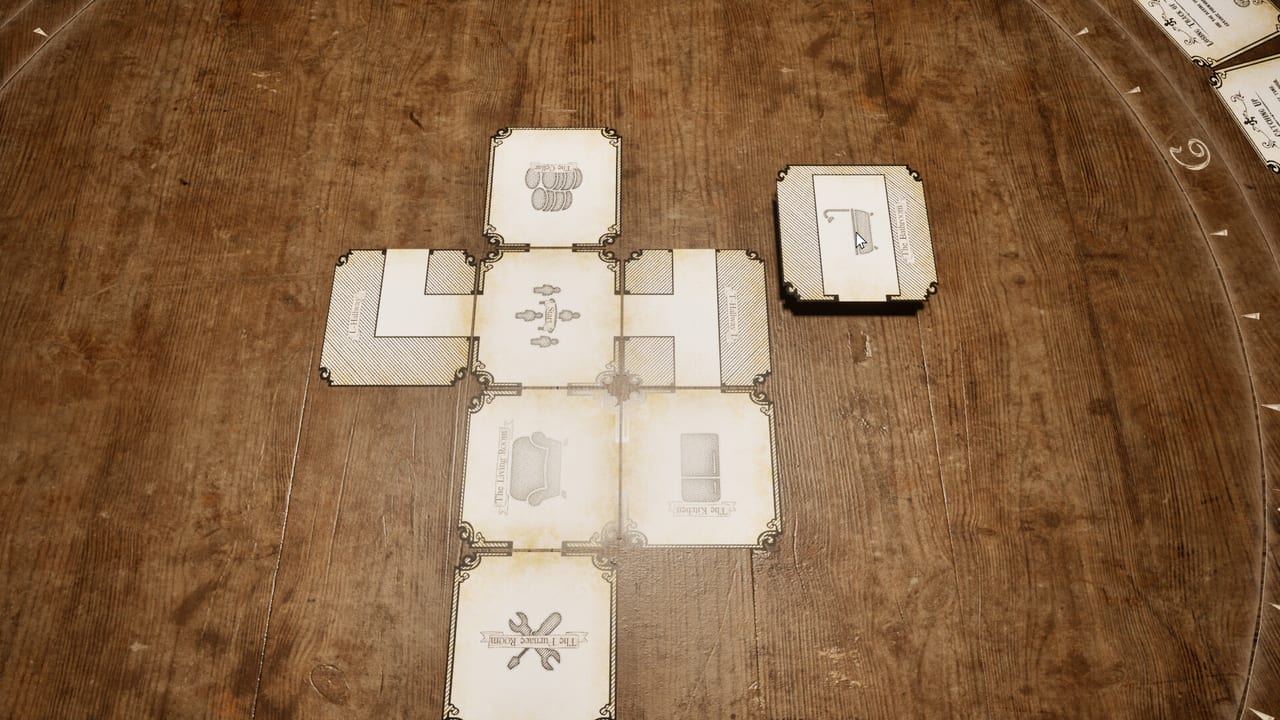
Investigation is how you leave. In the cabin game you do not brute-force a lock or wait for a scripted cutscene. Twisted Corridor’s Early Access build on Steam Windows uses Investigation Cards to seed evidence in the rooms you placed, then asks you to log that evidence until only one escape room still fits. If you skip this layer, the clock and the monster pawn will close the run while you are still admiring The Living Room sofa.
The game entered Early Access on 27 August 2026 with 30+ cards and 12 monsters. It is 1–4 players, solo or online co-op, English interface and full audio, localization planned. The first-run complaint is consistent: nothing shows you what a clue looks like. Rules feel opaque because the tutorial never holds up a completed notebook. Press M for in-game tips — many players miss that key entirely — then use this page as the missing picture of the investigation loop.
Investigation is the exit
Room Cards build the cabin. Event Cards try to kill you inside it. Investigation Cards are the only type that answers the actual question: which room is safe to leave through? After you play one, stand up. Evidence does not help from the chair. Walk the rooms you have actually placed — The Cellar with its barrels, The Kitchen fridge, The Farmer’s Ranch tools, The Garden Shed hook and scythe, hallways, The Living Room — and look at objects as if you were in a ghost-hunting sim. Presence matters. Absence matters more than people expect.
The win condition on How to Escape is brutal and short. Identify the correct room from this evidence, then enter it before the table clock hits 12 and before the monster marker catches the player marker. When the ghost is already on you in 3D, that same correct room is still the only escape. Investigation is not optional flavour. It is the name of the door.
How evidence shows up
Evidence is object-dependent. The cabin is player-designed, so the game cannot assume a grandfather clock, a particular painting, or a fridge is in the floor plan. If the object exists in a room you placed, some clues can appear there. If it does not exist, you still record that. A blank is a fact. Groups that only write down the spooky hits invent a room that the deck never supported.
Because the deck is shuffled every game, you will not see the same object set twice. That is the point of Early Access variety, and it is why a wiki page cannot give you a single spoiler code for the exit. What it can give you is a method. Play Investigation Cards once the cabin is connected enough to search quickly. Do not wait until Event Cards own the hallways. Stalling is weak; a Neighbour darkness or an Attic Stalker chase in a dead-end Cellar will end the identification work for you.
If you are new to the sit/stand rhythm, read Getting Started first. If you keep dying during the search, read Survive Events so a minigame does not wipe a half-finished notebook.
The notebook habit
Treat the notebook as the run’s source of truth. After each search, sit down and write:
- Which room you entered.
- Which objects were present.
- Which objects you expected and did not find.
- Whether an investigation tell actually fired in that room.
Then compare the pattern to candidate escape rooms. Cross off rooms that contradict a confirmed absence. Cross off rooms that cannot host an object a clue required. The last room standing is the one you path to at 11 o’clock. If two rooms still fit, you need another Investigation Card, not a coin flip.
Co-op makes this either excellent or worthless. One player should own the notebook and talk out loud. The others should not overwrite the log with vibes from a single hallway scare. Voice chat helps; the in-game voice icon is covered on controls. A printable-style layout lives on the clue notebook tool page if you want a second sheet on a phone.
Object-dependent clues
Think in dependencies, not in lore. A clue that refers to a grandfather clock is not a story beat. It is a check: did anyone place a room that can contain that clock? If yes, go look. If the clock is there, log it against the rooms that can hold it. If the clock is missing, log the miss against rooms that needed it. The same logic applies to kitchen appliances, ranch tools, shed implements, cellar barrels, and living-room furniture. Your floor plan is the evidence board.
This is why room layout is not a separate minigame. A loop of connected rooms lets you re-check objects after a new Investigation Card without crossing the entire house under a chase. A pretty dead-end Ranch looks unique on the table and becomes a wasted search when you have four minutes left. Place rooms that you are willing to visit twice.
Card jobs for this layer are listed on card types. Investigation first, Lifesavers when the monster pawn is actually closing, Event Cards treated as interruptions. Winning an event often has no reward. Losing still pulls the ghost closer. Do not spend the identification window farming minigames.
Grandfather clock example
Here is the pattern in one object. You play an Investigation Card. The tell you get only makes sense if a grandfather clock exists somewhere in the cabin. You stand up. You walk The Living Room, the hallway, the study-like spaces you placed. Either you find the clock or you do not.
If you find it, the candidate escape rooms shrink to rooms consistent with “clock present” plus every other tick you have already logged. If you do not find it, you have not failed the investigation — you have a negative. Rooms that required the clock drop out. Rooms that required its absence stay in. The mistake is treating “I didn’t see it” as “the clue was fake.” In a player-built cabin, missing furniture is the clue.
Repeat that method for fridge, sofa, barrels, tools, hook, scythe. The notebook fills. The exit gets a name. Then you still have to reach it before 12, which is a movement problem and a pawn problem, not a riddle.
What a first run usually misses
Players miss M. They miss that absence is data. They stay seated after playing Investigation Cards. They build a cabin so large that a full search takes longer than the clock allows. They let time-skip cards eat the window in solo. They assume the correct room is “the last room we placed” or “the room with the most props.” None of those heuristics survive a second event.
They also mix investigation with panic. When Neighbour drops darkness or Attic Stalker starts a chase, the notebook gets abandoned. Survive the event, sit, write. The First Round Patch made Attic Stalker more forgiving, made totems droppable, reduced chase speed, and unstuck some AI. Use that breathing room to log, not to wander.
For monster tells that are not investigation tells, use the Monsters Hub. For the order of plays that makes a notebook possible, stay with rooms-then-investigate from Getting Started. For the moment you commit and run, How to Escape is the page that should be in someone’s overlay.
Frequently Asked Questions
Quick answers about cards, clues, monsters, and escaping the cabin.
What are Investigation Cards for?
They seed evidence in the cabin so you can identify the correct escape room. Playing one is useless until you STAND UP and search. The win condition is on How to Escape.
Why does a grandfather clock matter?
Some clues only resolve if that object exists in a room you placed. Presence and absence are both data. The same rule applies to fridges, sofas, barrels, and shed tools. Card types lists the investigation job against other cards.
Is there a tutorial that shows example clues?
Not a clear one. That is a common Early Access complaint. Press M for tips, keep a notebook, and use the clue notebook page as a second sheet.
Should I investigate before the cabin is built?
Build a connected layout first, preferably a loop, then spam investigation. Searching a half-cabin wastes cards. Layout advice is on room layout.
Do I write down rooms where nothing happened?
Yes. A blank search is a negative that knocks candidate exits out. If you only log scares, you will pick the wrong room when the ghost is already in the hall.
Can co-op split investigation?
Yes. One player should own the notebook; others search assigned rooms. Job splits and the final hour are on Co-op.