
Getting Started in the Cabin Game
Sit at the table, press M, place rooms, then stand up before the clock eats the run.
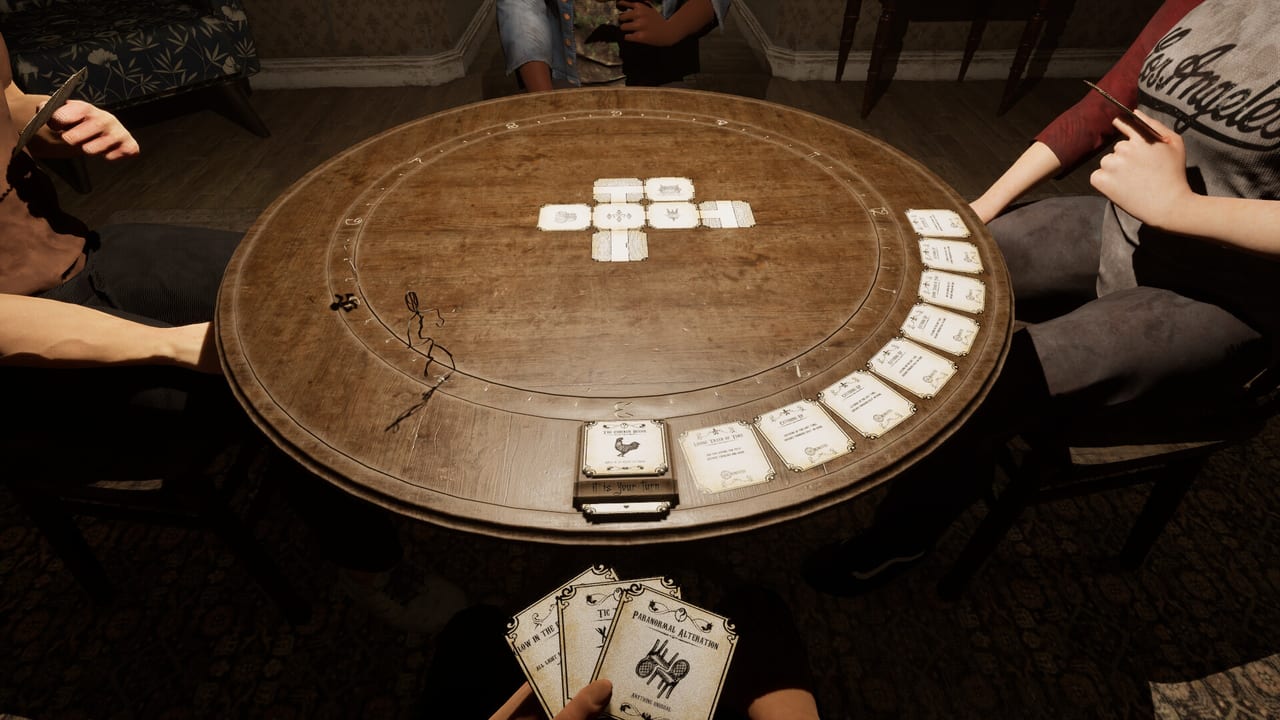
the cabin game entered Early Access on 27 August 2026 as a 1–4 player horror title from Twisted Corridor. You play on Steam Windows, solo or in online co-op. English is the only interface and full audio track; localization is planned. The price is $11.99 USD and is meant to stay that price after Early Access. Twisted Corridor is targeting a 6–8 month Early Access window with more cards, monsters, and store items. This page is the first-session briefing: what to do before you deal, how sit-and-stand actually works, and why the clock track around the table is more important than any single scare.
If flashing lights are a problem, stop here. The game includes strobing and flashing that can trigger seizures for a small percentage of people. Read controls and settings before a long night. Check system requirements if the first boot stutters; many players run low graphics with VSync off.
Before you sit down
Buy and launch from the Steam store page. Create or join a lobby, then sit at the round table. If a join code lies or a turn will not start, stop and read hosting. The Dining Room is the starting room — the 2nd wave of bug fixes printed that on the table. The cabin is not a fixed map. You and your group design it with Room Cards as the deck is played. Early Access currently includes 30+ cards and 12 monsters. Treat that as a snapshot, not a complete catalogue — the roadmap is more cards, more events, more puzzles.
Candy earned during play spends at The Boo Factory for lobby pets, cosmetics, and tricks ‘n treats. Those treats can mess with friends. On a first learning run, do not spend them to grief the table. Save that argument for a later night and read co-op first.
Press M before you guess
Press M. In-game tips live on that key, and a large share of first-run confusion is people who never found them. Early Access does not hold your hand on what a clue looks like, how an Event Card minigame is supposed to end, or why the pawn on the table just jumped. M will not replace this wiki, but it will stop you inventing rules the deck does not use.
The official reveal trailer above is the tone check: cards, a cabin that mutates, then walking the rooms you built. It is not a tutorial. After you watch it, come back to the table and treat the next sections as the missing first hour.
Sit, deal, then STAND UP
The core loop is two modes. You sit at the round table and play a card. Then you STAND UP and walk the cabin in first person. Sitting is for the deck, the clock, and talking through the next play. Standing is for searching rooms, surviving events, and placing your body where the next evidence might be.
New players stay seated too long. A Room Card that puts The Living Room or The Kitchen into the floor plan does nothing for you until someone walks in and looks at the sofa, the fridge, the barrels in The Cellar, the tools on The Farmer’s Ranch, or the hook and scythe in The Garden Shed. Investigation evidence depends on whether objects exist in those rooms. If nobody stands up, you are only watching pawns crawl around a clock.
In co-op, do not all stand up into the same doorway. One player can stay at the table and call the clock while others search. Details live on co-op. Solo players have to bounce: play, stand, search, sit, play again. That context-switch is the skill.
Your first rooms
Open with Room Cards and keep every new room connected. A loop or a simple corridor is worth more than a pretty dead end. Later Event Cards spawn threats across the map; if The Cellar only connects through a single hallway, that hallway becomes the whole game. Room layout goes deeper, but the first-session rule is short: connect, then connect again.
Known rooms from the current build include The Cellar (barrels), The Living Room (sofa), The Kitchen (fridge), The Farmer’s Ranch (tools), The Garden Shed (hook/scythe), and hallways. You will not see all of them every run. The deck is shuffled at the start of every game. Place what you are dealt, then remember what you placed — investigation later asks whether a grandfather clock, or something like it, is actually in the cabin.
Do not hoard Room Cards hoping for a perfect floor plan. A small connected cabin you can search in thirty seconds beats a sprawling house you cannot finish before an Event Card drops a chase in the far wing. Room placement has late-game consequences. The cute Cellar at 2 o’clock is a coffin at 11.
The clock track is the real timer
Look at the table. A clock/track runs around it with a player pawn and a monster pawn. You must identify the correct escape room from investigation evidence before the clock hits 12 and before the monster marker catches the player marker. Those are two fail states, not one. A Lifesaver Card pushes the monster marker away. A Progress Card shoves it forward. Time-skip cards jump the clock; solo players report seeing too many of them and sliding into two-hour runs that still lose.
Stalling is a weak plan. Event Cards can spawn the threat anywhere you built, including behind you. The First Round Patch added a separate slider for clock audio after the tick dominated the mix. Use that slider. Then keep watching the pawns. People lose runs because they treated the cabin as a walking sim and forgot the table was a bomb.
What the cards are doing
You do not need the full card types page on minute one, but you need the jobs:
- Room Cards place rooms. They must connect.
- Event Cards spawn a monster or minigame. Losing pulls the ghost closer. Winning often has no reward.
- Lifesaver Cards buy space on the track.
- Investigation Cards create Phasmophobia-style evidence in rooms.
- Progress Cards advance the monster.
- Time-skip cards burn clock.
On a first session, priority is rooms, then investigation, then surviving whatever Event Card hits. Spend Lifesavers when the monster pawn is about to tag you, not because a hallway felt spooky. Event survival has its own page: Survive Events. The escape itself is How to Escape. Clue logging is Clues.
Settings that save a first run
Before you blame the Neighbour event for a crash, drop graphics to low and turn VSync off — that is the current player consensus, not a promise. The First Round Patch added an FPS cap, which helps if the frame time was jumping during chases. If the attic chase feels unfair, know that Attic Stalker was tuned to be more forgiving in that same patch, and totems can be dropped. Monkey collision and popcorn balls in musical rooms were also touched. Read patch notes once, then go back to the table.
When the ghost catches you in 3D space, the out is the correct escape room, not sprinting in a circle. If you have not identified that room, you are already late — that is an investigation problem, covered in Clues and the clue notebook.
Finish the first session with three habits: press M, keep rooms connected, watch both pawns. Everything else on this wiki is those three habits under pressure.
Frequently Asked Questions
Quick answers about cards, clues, monsters, and escaping the cabin.
What key shows tips in the cabin game?
Press M. A lot of first-run players miss it. Pair the tip layer with controls so you are not fighting the camera while you learn the deck.
Do I stay seated at the table the whole run?
No. You sit to play cards, then STAND UP and walk the cabin. Searching rooms is how investigation evidence appears. See How to Escape for why that walk has to end in the correct room.
What should I play first from the deck?
Unlock rooms and keep them connected, preferably in a loop. Then push investigation. Stalling the clock is weaker than it looks because Event Cards can spawn anywhere.
Is this a solo game or co-op?
1–4 players, solo or online co-op, Steam Windows. English interface and full audio; localization is planned. Job splits are on Co-op.
The clock sound is unbearable. Is that intended?
It was painfully loud in the first days of Early Access. The First Round Patch added a clock audio slider. Use it, then still watch the pawns — quieter audio does not slow the track. Settings collects the other recommended toggles.
Where do I report bugs after a first session?
Use in-game feedback or the official Discord. Patch history is on the Updates Hub. Play remains on the Steam store; this wiki is unofficial.