
the cabin game Cards Hub
Priority means information and connectivity, not a PvP power ranking.
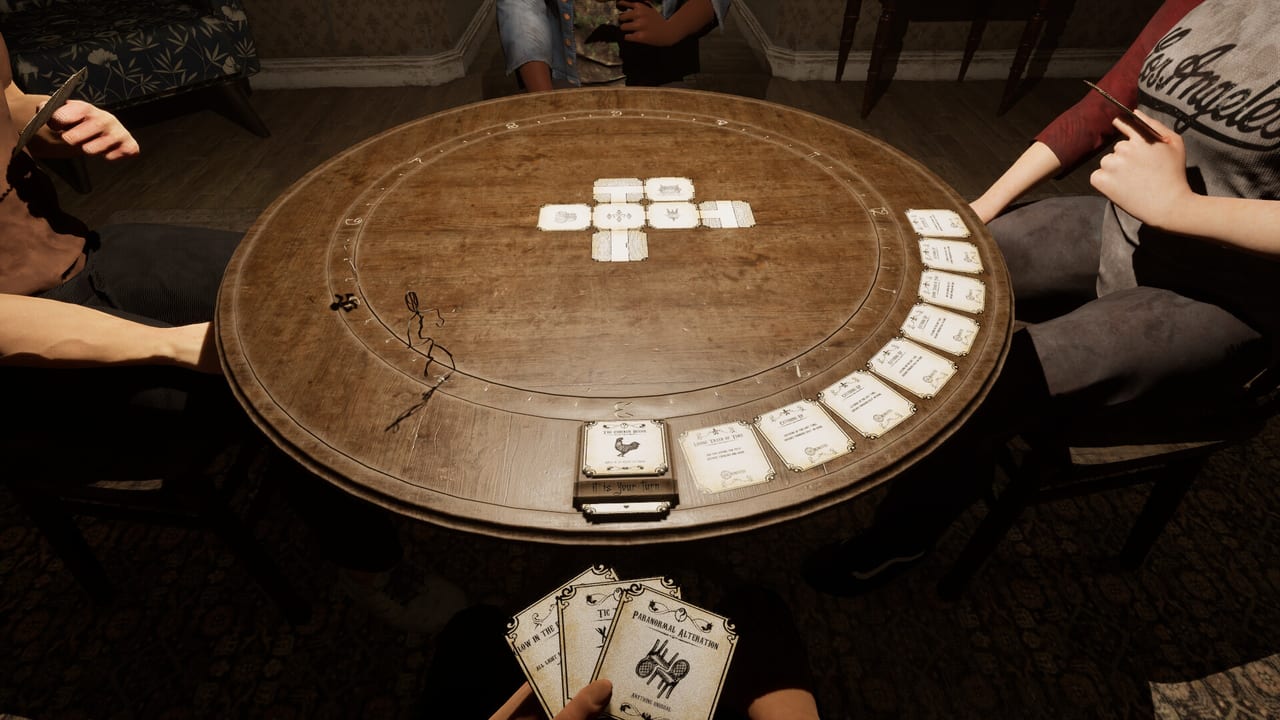
the cabin game is a table-first horror loop. You sit at a round wooden table, play the hand you were dealt, then stand up and walk the cabin those cards just built. This Cards Hub exists so you spend the right card at the right hour. It is not a player-versus-player power ranking. There is no meta DPS chart, no rarity ladder, and no secret S-tier monster you pick in a lobby. “Tier” here means practical priority: which plays buy evidence and a walkable floor plan before the clock track around the table rim hits 12, and before the monster pawn catches your pawn.
Twisted Corridor put the cabin game into Steam Early Access on 27 August 2026. The current deck is 30+ cards for 1–4 players, solo or online co-op. Interface and full audio are English only. Press M whenever a card looks like flavor text; the in-game tip overlay is faster than arguing over a riddle while the monster marker ticks forward.
How the table actually scores a run
The rim of the table is a clock track. Two pawns share it: yours and the monster’s. Progress cards shove the monster pawn toward you. Lifesaver cards shove that pawn away. Time-skip cards jump the clock itself. Unique progress cards are planned; the four-leaf clover minigame is already a player complaint because it plays like a pure guess. None of those motions win the game. You win by identifying the correct escape room through investigation, then leaving through that room before 12 o’clock and before the monster marker catches you. A beautiful chase clip that never names the exit is still a loss.
Room cards sit in the center of the table as a player-designed floor plan. They must connect. A loop of hallways is usually safer than a long dead-end wing. Events then spawn minigames inside the rooms you already placed, which is why early geometry has late-game teeth. Read the dedicated room layout page before you start treating every extra room as free real estate.
Practical priority (read this as a shopping list)
- Investigation plus room connectivity. Investigation cards seed evidence in the cabin the way a Phasmophobia-style hunt seeds clues: you stand up, search, and write down what the room is trying to tell you. Room cards that keep every wing reachable make that search cheap. If the floor plan is a snarl, evidence you cannot reach might as well not exist. Keep a running log in the clue notebook instead of trusting memory after a chase.
- Lifesavers in a pinch. Hold them. Play them when the monster pawn is one sector from tagging you, not because the card feels exciting. A lifesaver spent at 3 o’clock is often a wasted shove; the same card at 10 o’clock is the difference between finishing an evidence sweep and folding the run.
- Events you already understand. Event cards yank you out of the table and into a minigame. A readable event is cheaper than an unread one. After you have survived Neighbour, Attic stalker, Cutting Corner, SICK OF BEING DEAD, and the musical-rooms monkey once each, those cards drop in cost. Until then, treat unknown events as tax. The event cards page ranks known encounters by danger and readability without pretending the list is official or complete.
- Time-skips last, especially solo. Skipping time inflates the length of a one-player run. Solo already has fewer hands feeding the table; jumping the clock without adding evidence is how people watch 12 arrive with an empty notebook. In a four-player lobby a skip can be a tempo tool. Alone, it is usually a trap.
That order is the entire point of this hub. If two cards are in your hand and only one of them creates information or safer doors, play the information.
Child pages in this hub
- Card types — room, event, investigation, lifesaver, progress, and time-skip roles, including how they shove pawns.
- Event cards — danger versus readability for the events players keep naming in Early Access.
- Room layout — how to place The Cellar, The Living Room, The Kitchen, The Farmer’s Ranch, The Garden Shed, and hallways so chases have a loop.
- Progress cards — pawn tax versus clock jumps, unique cards on the roadmap, four-leaf clover guesses, and the RNG of a required room never drawing.
- Lifesaver cards — when to shove the monster pawn back, and why a lifesaver is not an identification tool.
What does not belong on this ranking
Candy spent at the Boo Factory buys cosmetics, lobby pets, and tricks ‘n treats. Those unlocks are fun for messing with friends in the lobby. They do not move the clock track and they do not identify the escape room. Do not let a new hat change which card you play at 11 o’clock. Solo skip-spam and missing dining-room cards are unpacked on Solo, not solved by a lobby pet.
Monster encounters are not card ranks either. The Monsters Hub covers the hallway gaunt, the giant monkey, the suited Neighbour, the attic chase, the headless table set-piece, the child’s-room toy-box, and the spike/slat chase. You still beat those threats by building a connected cabin and finishing investigation, not by “counter-picking” a monster like a fighting-game character.
First-hour habits that beat a pretty hand
Play with people who will stand up and search, not just slam events. Agree before the first shuffle that investigation is the default spend. When an event card hits the table, assign one player to watch the clock pawns while the others handle the minigame. After you sit back down, update the clue notebook before the next draw. If a card text is a riddle, read it out loud once — SICK OF BEING DEAD already tells you to find medicine and flush pills; the table does not need a debate.
When a patch lands, re-read patch notes before you reuse old event muscle memory. The First Round patch already changed attic chase forgiveness, totem dropping, popcorn balls, and monkey collision. An event you “understood” last session may have different collision or item rules now.
New to the loop? Start with getting started, then how to escape and clues. For the scary half of the deck, keep survive events and the Early Access notes next to this hub. The deck is still growing; treat every ranking on this wiki as a working priority list for the current 30+ cards, not a finished competitive bible.
Frequently Asked Questions
Quick answers about cards, clues, monsters, and escaping the cabin.
Is this a PvP tier list?
No. the cabin game has no PvP power ranking. This hub orders cards by practical value: investigation and room connectivity first, lifesavers when the monster pawn is close, events you already understand, and time-skips last — especially in solo.
How many cards are in Early Access?
Twisted Corridor describes a variety of 30+ cards in the current Early Access build, including 12 monsters. The full release is planned to add many more event, monster, and puzzle cards. This wiki does not treat 30+ as a frozen official checklist.
Should I play time-skip cards in a solo run?
Usually no. Time-skips jump the clock without adding evidence, which inflates solo length and makes 12 o'clock arrive with an empty notebook. In a full lobby they can be tempo. Alone, spend investigation and rooms instead. See Solo and progress cards.
Do Boo Factory cosmetics change card priority?
No. Candy spent on cosmetics, lobby pets, and tricks 'n treats is lobby flavor. It does not shove the monster pawn or identify the escape room. Rank the cards on the table, not the hat in the Boo Factory.
Where do I read event and monster pages from here?
Stay in this hub for card types, event cards, room layout, and progress cards. Threat write-ups live under the Monsters Hub, including Attic stalker and Neighbour.
What is the four-leaf clover minigame?
Players treat it as a pure guess on a progress-adjacent card. Do not plan a run around winning it. Details, unique-card plans, and room RNG live on progress cards.