
Room Layout in the cabin game
Player-designed cabins must connect. A loop of hallways is how you survive the events you placed.
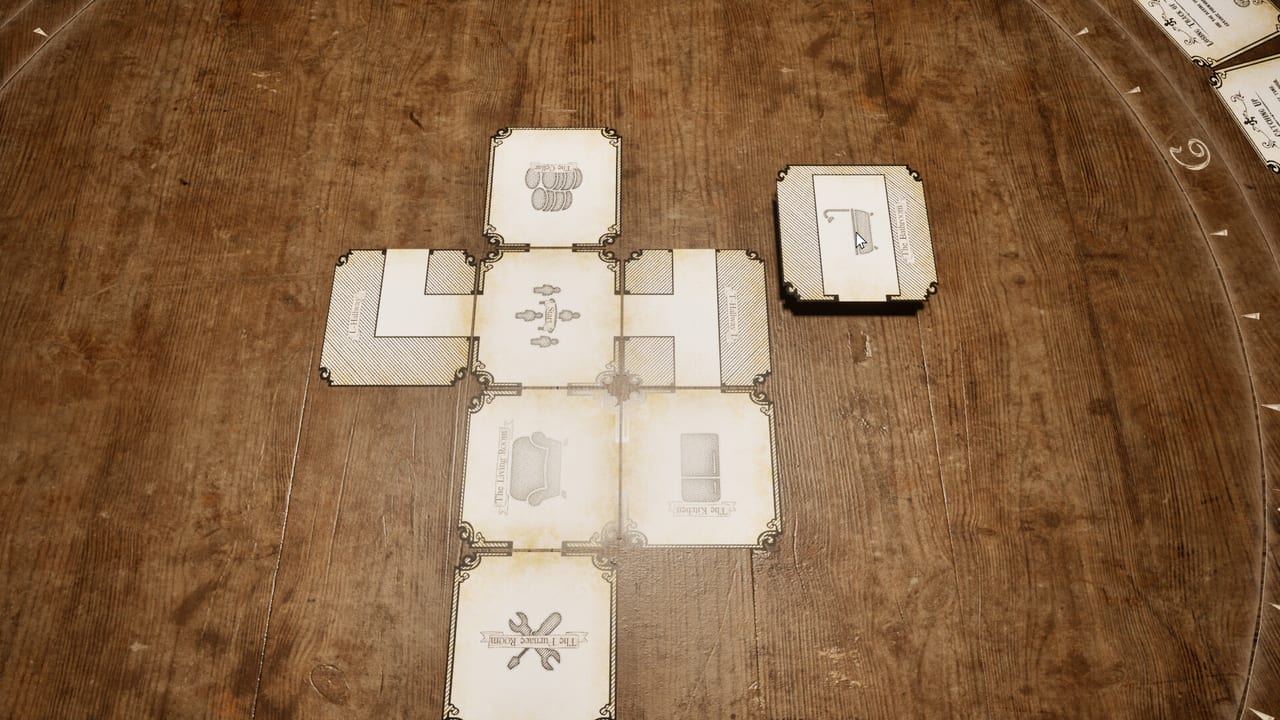
the cabin game does not ship a one-size map. Room cards BUILD the cabin in the center of the table as you play. The group chooses which wing goes where. The only hard rule that matters is connectivity: doors have to meet, and a loop of hallways is usually the difference between kiting a chase and dying in The Cellar with one exit. This page is the geometry half of the Cards Hub priority. Investigation still names the escape. Layout decides whether you live long enough to write the name down.
Twisted Corridor’s store copy is blunt: be careful how you place rooms, because as events unfold, early-game choices have late-game consequences. That sentence is the whole article. You are designing the arena that event cards and the Monsters Hub will later occupy.
What a legal cabin looks like on the table
Room cards sit as a floor plan, often in a plus or branching cross. Hallway cards are L-shaped connectors. If two room faces do not share a door, you cannot walk that join in first person. Players argue about “looking cool” from the table camera. The walkable graph is the only view that counts.
When you stand up, you are touring the plan you already glued down. Press M if a doorway feels illegal; the tip overlay will not rebuild a bad wing, but it will stop you wasting a minute on a wall that was never a door.
Known rooms (not a complete catalog)
Early Access art and table shots keep showing the same names. Other room cards exist in the 30+ pool; this wiki will not invent them.
- The Cellar — barrels. Natural pit. Give it two connections or accept that a chase that starts here is a coin flip.
- The Living Room — sofa. Feels like a hub. It is not automatically the escape room. Investigation decides that, not furniture.
- The Kitchen — fridge. Work space with tight corners. Bad place to meet the giant monkey if it only has one door.
- The Farmer’s Ranch — crossed wrenches. A chunky wing. If you park it at the end of a single hallway, you have built a trap for your future selves.
- The Garden Shed — easy to treat as leftover. Leftover rooms still host events. If the shed is on the plan, it needs a way out that is not a one-way corridor.
- Hallways — the actual skill card. L pieces close loops. Straight feelings from the table camera often hide a missing join. Rotate the hallway until both ends eat a door.
Place the first two rooms so they already share a door. Place the third so you could walk a triangle. If the fourth card is a hallway, use it to close a loop instead of launching a new dead-end peninsula.
Connectivity rules that survive contact with events
Must connect. An isolated card is a dead player who drew the wrong event. If a room cannot be reached from the table’s “start” feeling, do not play it unless you are also playing the hallway that stitches it in on the same turn.
Loop is good. A loop means you can enter a chase from one door and leave from another without reversing into the monster. Musical rooms plus the giant monkey, Attic stalker, and the spike/slat chase all reward a ring of hallways. Cutting Corner rewards patience more than geometry, but a second door still lets a panicking teammate leave without shoving the man.
Dead-ends are late-game taxes. The Cellar with one hallway is fine at 2 o’clock when nobody is hunting you. It is a coffin at 10 o’clock when Neighbour darkness drops or the monkey occupies the only join. If you must keep a dead-end, keep it short and never store your only investigation path inside it.
Hubs need extra doors, not extra furniture. The Living Room and The Kitchen look like social spaces. Give them three connections if the deck allows. A pretty sofa does not kite a gaunt hallway figure with “Welcome to Reality” painted on the wall.
Late-game consequences of early placements
Events spawn in the cabin you already built. Neighbour’s storage scream needs a storage-like room to inhabit; if your only box room is a one-door shed, that is where the suited figure will pin you. Attic chase wants vertical tightness; if you also left a single stair and no loop, the First Round “more forgiving when running” patch still cannot create a second door you never placed. The headless table set-piece will sit wherever a dining layout exists — look, log, do not redesign the whole cabin in a panic.
Progress cards will keep moving the monster pawn along the rim while you admire architecture. Layout is not a reason to skip investigation. A perfect loop with an empty clue notebook still loses at 12 o’clock. Geometry buys the time that clues and how to escape spend.
A simple build order for 1–4 players
- Open with two rooms that already share a door. Living Room plus Kitchen is a common, readable start. It is not mandatory.
- Spend the first hallway on a loop seed, not a new wing.
- Park The Cellar and The Garden Shed only after they have two potential joins, even if the second join is a hallway you have not played yet. Say the plan out loud so a teammate does not drop a dead-end on your seed.
- The Farmer’s Ranch goes on a side of the loop, never as the tip of a spike.
- Stop expanding when the walkable graph is a ring with short spurs. Extra rooms past that point are extra event stages.
Solo players should be stricter. You cannot split: one body searches while another watches the pawn. A loop you can run with one sprint is worth more than four named rooms you cannot traverse before the monster marker catches you. Time-skip cards make this worse — they inflate solo length without adding doors. Spend the hand on a hallway instead.
Online co-op can afford a slightly larger cabin if one player is on permanent “pawn watch” while others search. Do not use that extra labor to build a maze. Use it to finish evidence in every wing, including the shed you almost forgot.
Layout versus the rest of the wiki
Card jobs: card types. Event danger: event cards. Chase bodies: monster roster, Neighbour, Attic stalker. Hands-on survival: survive events. Onboarding: getting started. Patch changes that affect collision and chase forgiveness: patch notes and Early Access.
If a placement argument starts at the table, default to the loop. You can argue aesthetics after someone has escaped.
Frequently Asked Questions
Quick answers about cards, clues, monsters, and escaping the cabin.
Do rooms have to connect?
Yes. Room cards build a player-designed cabin, and doors must meet. An isolated wing is a late-game trap when an event or chase spawns there. Hallway cards exist to stitch rooms into a walkable graph.
Why is a loop better than a long corridor?
A loop lets you enter a chase through one door and leave through another without reversing into the monster. The giant monkey, attic stalker, and spike/slat chase all punish single-door rooms and dead-end cellars.
Which rooms show up in Early Access?
Players keep seeing The Cellar, The Living Room, The Kitchen, The Farmer's Ranch, The Garden Shed, and hallways. Other room cards exist in the 30+ deck. This page does not invent names that public notes have not shown.
Can a good layout replace investigation?
No. Layout buys time. Investigation still names the correct escape room before 12 o'clock and before the monster pawn catches you. A perfect loop with an empty notebook is still a loss. Use the clue notebook.
Where should solo players spend room cards?
On a small ring with short spurs. Solo cannot split search and pawn-watch. Extra wings become extra event stages you must run alone. Skip time-skip cards; play hallways that close the loop instead.