
Progress Cards in the cabin game
Pawn tax, clock jumps, unique cards on the roadmap, and why the four-leaf clover feels like a guess.
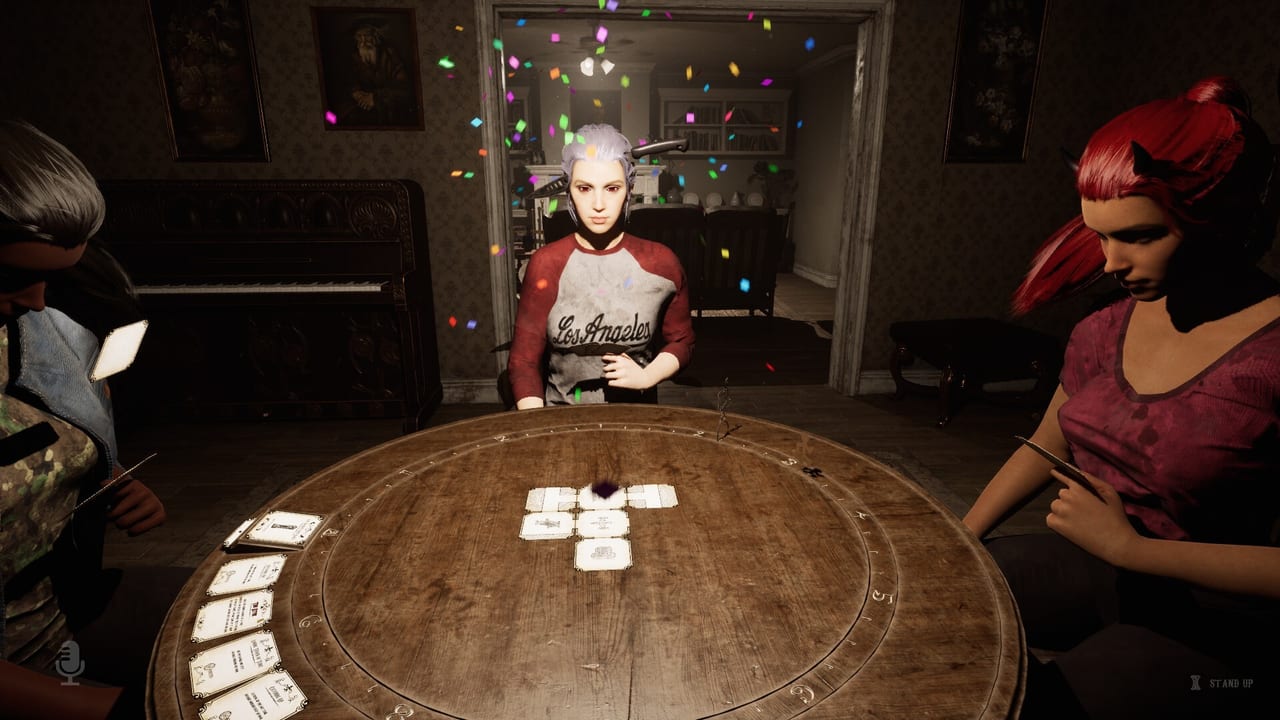
Progress cards are how the cabin game keeps the hunt honest. You sit at the round table, the rim is a clock track, and two pawns share it: yours and the monster’s. A progress card moves the monster pawn forward. It does not build a room, seed a clue, or complete an Event Card minigame. It is the tax for touching the deck. If you treat progress as flavour, 12 o’clock is a surprise.
Time-skip cards are a related but different knife. They jump the clock itself. They do not shove the monster marker backward. They do not add evidence. In four-player lobbies a skip can be tempo. In solo it is usually a trap: players already report two-hour runs padded with roughly 30 time skips and about 15 rooms.
This page sits under the Cards Hub as practical priority, not a PvP ranking. Pair it with the type encyclopedia on card types, the minigame list on event cards, and the actual win condition on How to Escape. Press M when a progress card looks like a riddle; the overlay is faster than a table argument while the pawn ticks.
The game entered Early Access on 27 August 2026. Steam Windows, 1–4 online co-op or solo, $11.99 USD, 30+ cards, 12 monsters, English-only in-game with localization planned. Unique progress cards are on the roadmap. They are not in this write-up as if they already rewired the deck.
What progress does on the table
Look at the rim before you play. If the monster pawn is far, a progress card is expensive but survivable. If the pawn is one sector from tagging you, progress is how you fold the run with your own hand. Lifesaver cards are the opposite shove: they push the monster pawn away. Hold savers for that pinch. Do not spend a lifesaver at 3 o’clock because a progress card felt rude.
Some progress is a card you must resolve to keep the hand flowing. Some is bundled into other plays. Either way, you cannot freeze the hunt by refusing to spend. The table advances. If progress is the only legal play, play it, then immediately look for investigation or a connecting hallway on the next hand. Do not chain progress “to see what happens.” What happens is 12.
Progress does not pause because you stood up. While you search The Cellar, the rim is still a bomb. In co-op, assign a caller who glances at both pawns whenever someone leaves the table. In solo, sit down after every minigame and look. How to Escape is the page that keeps the on-screen chase and the table pawn from getting mixed up.
Time-skips: clock jumps, not progress
People lump skips into “progress” because both cards make the night feel faster. They are not the same lever.
- Progress: monster pawn moves toward you.
- Time-skip: the clock jumps. Identification window shrinks. Rooms and clues do not appear as a reward.
Solo reports are the cautionary tale. Fewer people means fewer cards played, so the deck’s skip density hurts more. A dining-room escape can be impossible if that Room Card never appears; skipping hours does not spawn it. If your notebook is empty, a skip is volunteering to meet the monster with the same empty notebook at a later number. Put skips last on the Cards Hub shopping list, especially alone. Details on that failure mode live on Solo.
In a full lobby, a skip can sometimes burn a dead hour because four brains already hold clues and the floor plan is connected. Even then, ask whether an unused investigation is sitting in someone else’s hand. Information beats tempo.
Unique progress cards (planned, not current)
The roadmap names unique progress cards next to more Event Card types. The implication is less generic “draw and hope” and more cards that mark that this cabin is on a path: clue unlocks, exit steps, persistent advantages inside a single session. That is good news if you hate stalling. It is also why this wiki will not pretend the current deck already teaches like that.
Until unique progress ships, you log objects yourself. The clue notebook and clues are the workaround, not optional flavour. Do not expect unique progress to delete co-op tension either. The final hour is still escape together, die together, or every player for themselves. A unique card that helps the table can still be hoarded. Talk before you shuffle.
The four-leaf clover complaint
Players call the four-leaf clover minigame a pure guess. That is the current consensus this wiki will stand behind: the interaction does not read as a skill check with a tell you can learn. It reads as RNG with a lucky-leaf skin. If the card is progress-adjacent and the outcome shoves the pawn or burns time, a guess is a tax with extra steps.
Do not build a strategy around winning clover. Play the rest of the hand as if you might lose it. Hold a lifesaver if the monster pawn is already close. Do not slam an unread event card immediately after a failed guess just to “get a real encounter.” You already paid.
Press M. If a later patch adds a tell, the overlay will know before a month-old guide does. The First Round Patch did not rewrite clover; it touched clock audio, attic forgiveness, monkey collision, popcorn balls, FPS cap, droppable totems, AI unstuck, chase speed, and a maybe-fixed forest teleport. Re-read patch notes when a progress minigame suddenly feels different.
RNG when the required room never draws
Progress and skips collide with room RNG. Investigation can name a room you never built. The deck is shuffled every game. In co-op, four hands cycle faster, so the missing Room Card is rarer (not impossible). In solo, fewer cards played makes that brick real: a dining-room identity with no dining room is a run that cannot take the win condition even if you survived every chase.
That is not a reason to stall. Stalling invites Event Cards to spawn across a half-built cabin. It is a reason to unlock rooms first, keep them connected, and spend investigation while the monster pawn is still far. Progress you are forced to play is the cost of that plan, not a substitute for it. Layout rules sit on room layout. Event survival sits on survive events.
Candy at the Boo Factory still does not help. Cosmetics, lobby pets, and tricks ‘n treats will not shove a pawn or draw a missing room. Spend the deck. Watch the rim. Name the exit. That is the whole job of a progress card: to remind you the hunt is walking while you argue.
Shuffle Card (added September 20, 2026)
The September 20, 2026 update added a Shuffle Card to the progress card pool. It is a 30-minute progress card that swaps all the current cards the player is holding with new, random ones from the deck. This only applies to the person that plays the card — other players keep their hands.
Playing it replaces your entire hand with fresh draws. If you were holding useful Room Cards, Investigation Cards, or Lifesavers, you lose them. The 30-minute monster pawn push is the base cost; the hand disruption is the real price.
Use cases are narrow. If your hand is already useless — no rooms to place, no investigation to play, no lifesavers worth holding — the Shuffle Card converts dead weight into a fresh draw. If your hand has value, the Shuffle Card burns it. Solo players feel this more: fewer cards in the deck means each draw is more impactful. In a four-player lobby, the table still has cards in play even if one player’s hand gets reshuffled.
Frequently Asked Questions
Quick answers about cards, clues, monsters, and escaping the cabin.
What do progress cards do?
They move the monster pawn forward on the clock track around the table. They do not identify the escape room. Lifesavers shove that pawn back. See card types for the full job list.
Are time-skip cards the same as progress cards?
No. Time-skips jump the clock. Progress moves the monster pawn. Solo players already report skip-padded two-hour runs. Put skips last, especially alone — Solo.
What unique progress cards are planned?
Twisted Corridor named unique progress cards on the roadmap. They are not a current complete list. Until they ship, log clues yourself and do not stall.
Is the four-leaf clover minigame skill-based?
Players treat it as a pure guess. Do not plan a run around winning it. Hold a lifesaver if the monster pawn is close, and press M if a later patch adds a tell.
Can RNG make escape impossible?
Yes, if investigation names a room whose Room Card never draws — more common in solo because fewer cards are played. Build a connected cabin and still investigate; see How to Escape.
Should I play an event after a bad progress card?
Usually no. You already paid a tax. Unread events are another tax. Rank known minigames on event cards and only spend ones you already understand.